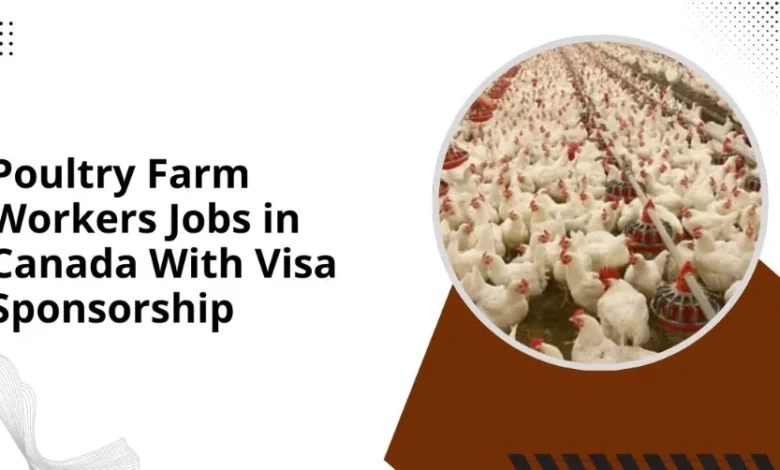
Do you dream of building a new life in Canada with a stable, well-paying job? Canada’s thriving agricultural sector is actively seeking dedicated individuals to join its poultry farms. This is more than just a job; it’s a gateway.
Imagine earning a solid Canadian wage, starting from $19 per hour, while being supported with visa sponsorship and on-farm accommodation. This is your chance to channel your strong work ethic into a career that offers not just income but a potential pathway to call Canada home permanently.
Why Poultry Farming Jobs Are in High Demand in Canada
Canada’s agricultural sector, particularly poultry farming, faces a persistent shortage of local workers. This creates a consistent demand for international talent in provinces with major farming industries like Ontario, Alberta, British Columbia, and Manitoba. The work is essential and involves the day-to-day care of poultry, egg collection, and processing.
For foreign workers, these roles are particularly attractive because they often come with visa sponsorship, assistance with accommodation, and a potential pathway to permanent residency through programs like the Agri-Food Immigration Pilot.
Details of Poultry Farm Workers’ Jobs in Canada
Key Points
- Job Title: Poultry Farm Worker
- Location: Across Canada (e.g., Ontario, Alberta, Manitoba, British Columbia)
- Salary: Starting from $19 CAD per hour (with opportunities for overtime pay)
- Visa Route: Primarily the Temporary Foreign Worker Program (TFWP)
- Work Hours: Typically a stable, full-time schedule of 35–45 hours per week.
Key Responsibilities of Poultry Farm Workers Jobs in Canada
Your daily duties would focus on animal welfare and farm operations:
- Feeding, watering, and monitoring the health of poultry (chickens, turkeys, ducks).
- Cleaning and disinfecting barns, coops, and equipment.
- Collecting, sorting, grading, and packaging eggs or poultry products.
- Assisting with the handling of birds in a safe and humane manner.
- Performing basic maintenance and equipment checks.
- Reporting any signs of illness, injury, or issues to a supervisor.
Jobs Benefits of Poultry Farm Workers in Canada
- Visa Sponsorship: The employer typically guides you through the work permit process.
- Accommodation: Often includes free or subsidized on-farm or nearby housing.
- Financial Incentives: Overtime pay and bonuses for weekend work are common.
- Training: No prior farm experience is usually required; on-the-job training is provided.
- Pathway to PR: This role is eligible for permanent residency programs like the Agri-Food Immigration Pilot, offering a long-term future in Canada.
Eligibility & Requirements
To be considered, you generally must:
- Be at least 18 years old.
- Be in good physical health, capable of manual labor and lifting 20-30 kg.
- Be willing to live and work in a rural or semi-rural area.
- Have a basic understanding of English or French (for safety and training).
- Hold a valid passport.
- No formal farm experience is required; a strong work ethic and willingness to learn are key.
Understanding Visa Sponsorship: The TFWP & LMIA Process
Most poultry farm jobs for foreign workers are facilitated through the Temporary Foreign Worker Program (TFWP).
Here’s how it works:
- Employer Gets an LMIA: Before hiring a foreign worker, the Canadian employer must obtain a Labour Market Impact Assessment (LMIA). This is a government document that proves no Canadian citizen or permanent resident is available to do the job. A positive LMIA is crucial.
- You Apply for a Work Permit: With a positive LMIA and a formal job offer from the employer, you can then apply for a closed work permit. This permit is tied to that specific employer and job.
Who Can Apply?
While opportunities are open to many nationalities, recruitment is often active from countries including the Philippines, India, Mexico, Nepal, Pakistan, Bangladesh, Ghana, Kenya, South Africa, and Indonesia. All applicants must meet the standard eligibility requirements set by Immigration, Refugees and Citizenship Canada (IRCC).
How to Apply for Poultry Farm Jobs with Visa Sponsorship
Follow these steps to navigate your job search effectively:
- Prepare a Strong CV: Highlight any experience with physical labor, animal care, teamwork, or machinery, even if not from farming. Emphasize reliability, stamina, and a strong work ethic.
- Search on the Right Platforms: Use reputable job boards that specialize in Canadian agriculture or general listings.
- Job Bank Canada (official government site)
- Indeed.ca
- AgriRecruiting.com
- Workvantage.ca
- LinkedIn (use precise keywords)
- Use Effective Keywords: In your searches, use terms like
- “Poultry Farm Worker LMIA Canada”
- “TFWP Farm Jobs 2025”
- “Agri-Food Immigration Pilot jobs”
- “Egg farm worker visa sponsorship”
- Apply and Interview: Submit your application and prepare for interviews (often conducted by phone or video call).
- Secure LMIA & Work Permit: If selected, your employer will obtain the LMIA and provide you with the documents needed to apply for your Canadian work permit.
Conclusion
Securing a poultry farm worker position in Canada represents a unique and viable opportunity for international job seekers. It combines immediate stability with competitive pay, visa sponsorship, and provided accommodation with a long-term vision for permanent residency through dedicated immigration pilots.
While the work is physically demanding and often in rural settings, the rewards are substantial: legal employment in Canada, valuable on-the-job training, and a clear potential future. By preparing a targeted application and partnering with a legitimate LMIA-approved employer, you can turn your ambition into a Canadian reality.
Frequently Asked Questions
What is the salary for a poultry farm worker in Canada?
The starting wage is typically $19 per hour or more. With overtime, weekend work, and bonuses, total earnings can be significantly higher. The position is a stable, full-time role (35-45 hours per week).
Do I need prior farming experience?
No, prior experience is not mandatory. Employers provide on-the-job training. However, any background in physical labor, animal care, or similar environments should be highlighted in your application.